
Active Warrants in Harris County
An active warrant is a court order that lets police arrest a named person. In Harris County, warrants come from several courts. Judges in the district courts, the County Criminal Courts at Law, the justice courts, and the City of Houston municipal courts all sign them. A warrant stays active until the person is arrested, posts bond, surrenders, or the court recalls it. Because the courts are split by case type, the warrant for a felony does not sit in the same place as a warrant for a city ticket. That is why one search rarely finds them all.
The Harris County Sheriff's Office, led by Sheriff Ed Gonzalez, runs the only public online warrant search the county offers. That tool is narrow on purpose. It lists only Class A and Class B misdemeanor warrants and other processes issued by a Harris County Criminal Court at Law. The list updates daily, so a name that is clear today may show up tomorrow, and the reverse can happen too. The Sheriff's Office posts the search behind a terms screen, and you have to accept the conditions before any search form will load.
Other warrant types live with other offices. Felony and other misdemeanor warrant information can come through the District Clerk's records system. Fine-only cases run through the justice courts. City of Houston tickets run through the municipal courts. Each of those is covered further down.
Types of Warrants in Harris County
Not every warrant means the same thing. The name on the order tells you why a judge signed it and what happens next. Some warrants follow a new charge. Others follow a missed court date. A few are aimed at evidence, not a person. Knowing the type helps you find the right office and plan the right step.
- Arrest warrant - issued when a judge finds probable cause that a named person committed a crime, which lets police take that person into custody.
- Bench warrant - issued by a judge from the bench, often after someone fails to appear in court or ignores a court order.
- Search warrant - authorizes police to search a place or item for evidence, and it targets property rather than a person.
- Capias / failure-to-appear - a capias orders an arrest to bring a person before the court, and a failure-to-appear capias follows a missed setting.
How to Search Harris County Warrants
The Sheriff's Office warrant search is the public starting point for misdemeanor warrants from the County Criminal Courts at Law. It opens from the Jail Information area of the Sheriff site. The portal is dynamic, and it makes you read and accept a conditions notice first. You agree that Harris County is not responsible for any errors or omissions in the data, and you release related claims. Only after you accept that notice does the search form appear. The image lower on the page shows the legal framework that governs this kind of public record.
- Open the Harris County Sheriff's Office warrant search and read the conditions of use notice on the first screen.
- Click the Agree button to accept the terms; if you choose I Don't Agree, the search form will not load.
- Enter a Last Name, and add a First Name and Date of Birth to narrow the results and reduce same-name matches.
- Run the search, then review any matching Class A or Class B misdemeanor warrants and processes.
- Use Reset to clear the form and run a new name, or move to another office if the warrant is a felony, a fine-only case, or a city ticket.
For felony and other warrant information, use the District Clerk's "Search Our Records and Documents" tool on the Harris County District Clerk website. Fine-only misdemeanor cases pending in the justice courts are found through the JP "Find My Case and Court Date" tool. City of Houston municipal fine-only cases go through Houston Municipal Courts, which you can reach by dialing 311 or 713-247-5479.
Harris County Warrant Search Fields
The Sheriff's warrant search keeps its form simple, but you cannot see it until you accept the terms. The first control is the agreement itself, not a name box. After you agree, a name search loads. A last name does the heavy lifting, while a first name and a date of birth help sort common names apart. The fields below reflect what the portal asks for once the conditions screen is cleared.
| Field Label | Type | Required | Notes |
|---|---|---|---|
| Agree / I Don't Agree | Button | Yes | Must accept the conditions of use to reach the search form |
| Last Name | Text | Yes | Main search field; spelling must match the warrant record |
| First Name | Text | No | Narrows results and helps separate same-last-name matches |
| Date of Birth | Date | No | Confirms identity when several people share a name |
| Search / Reset | Buttons | No | Search runs the query; Reset clears the form for a new name |
What a Harris County Warrant Record Shows
A warrant result is more than a name and a yes or no. Each listing carries a set of fields that explain the case behind the order. You can see who the warrant names, the court that issued it, the charge, and the bond the court set. A warrant number and a cause number tie the order back to a court file. The list below shows the fields that appear in a sample warrant listing.
| Field | What It Shows |
|---|---|
| Name | The full name of the person the warrant is issued for |
| DOB / Age | Date of birth or age, used to confirm identity |
| Warrant / Process Number | The unique number assigned to the warrant or process |
| Court | The County Criminal Court at Law that issued the order |
| Charge | The offense behind the warrant, such as a Class A or B misdemeanor |
| Bond Amount / Type | The dollar amount and whether surety, cash, or personal bond applies |
| Issue Date | The date the court signed the warrant |
| Cause Number | The court case number tied to the warrant |
Each listing also carries a disclaimer about errors and omissions. Names can match more than one person, so a hit is not proof of identity on its own. For the underlying case file, you may need to cross-check the court record with the clerk that holds it.
What to Do If You Have a Warrant
If your name shows up, act fast to avoid an arrest at home or work. For a Class A or B misdemeanor warrant from a County Criminal Court at Law, the Sheriff's Office lists three ways to clear it. You can post bail through a licensed surety bondsman. You can deposit cash in the full amount of the bail. Or you can surrender and ask a magistrate to release you on a personal bond. Bail can be posted, or a surrender made, at the HCSO Bonding Desk at 700 N. San Jacinto Street in Houston. The Bonding Desk is open 24 hours a day, 7 days a week, including holidays.
Before you go, it helps to confirm the warrant through the right source for your case type. A felony or other warrant may show through the District Clerk. A fine-only case shows through the justice courts. A city ticket shows through Houston Municipal Courts. Talk to a lawyer if you are unsure how to proceed.
- Confirm the warrant through the correct office: the Sheriff for Class A and B misdemeanors, the District Clerk for felony and other warrants, the JP site for fine-only cases, or Houston Municipal Courts for city tickets.
- Do not rely on a phone call or text demanding payment, and call the court, the clerk, or a lawyer if you are not sure the warrant is real.
- For a Sheriff Class A or B misdemeanor warrant, post a surety or cash bond, or surrender at the Bonding Desk at 700 N. San Jacinto Street.
- For a justice court fine-only case, use the official JP site to check whether you can pay, take a driver safety course, reset the case, or set a court date.
- Keep your receipts and confirm the recall or clearance, since a warrant recall after an online payment can take until the next business day.
Important: Do not try to apprehend anyone listed on a warrant search, and talk to a lawyer before you surrender so you understand your bond options and rights.
Warrant Payment Scams in Harris County
Scammers use the fear of arrest to take money. Real Harris County courts do not call to demand instant payment over the phone to lift a warrant. The justice court site posts a warning about fake court documents and payment scams that push you toward a QR code or a link. The Public Defender's Office has also warned about fraudulent calls that claim to be from the office and ask for money.
Scam Alert: No legitimate Harris County court or clerk will demand payment by phone, gift card, or a texted QR code to clear a warrant; verify any demand directly with the court or clerk before you pay.
If you get a call like this, hang up and contact the court or clerk yourself using a number from an official site. You can also check the warrant through the proper office to see if it is real. When in doubt, a lawyer can tell you whether a demand is legitimate.
Reporting Tips to the Sheriff's Office
The Sheriff's Office asks the public not to approach or try to detain anyone listed on the warrant search. That is the job of trained officers. If you have information about a person with an active warrant, you can pass a tip to HCSO at 713-755-6055. The warrant list updates daily, so a person who appears one day may already be cleared the next.
Officers are told not to rely on the public website alone to confirm a warrant or make an arrest. Law enforcement verifies through a secondary source or the HCSO Criminal Warrants Division. The same caution applies to the public. Treat an online hit as a lead to verify, not as the final word.
Public Access Laws for Harris County Warrants
Texas treats warrant and court information under a mix of public-records law and court rules. The Texas Public Information Act gives the public access to information held by government bodies, but access to judicial records runs through court rules instead of a plain open-records request. In practice, you use the Sheriff and clerk search tools for warrant and case data, and you save a formal request for administrative records that are not already posted. Most court records stay open unless a statute or a judge makes them confidential. The screenshot below comes from the official text of the law that frames this access.
The Public Information Act sits in Chapter 552 of the Government Code. The image is from Texas Government Code Chapter 552, the Public Information Act.
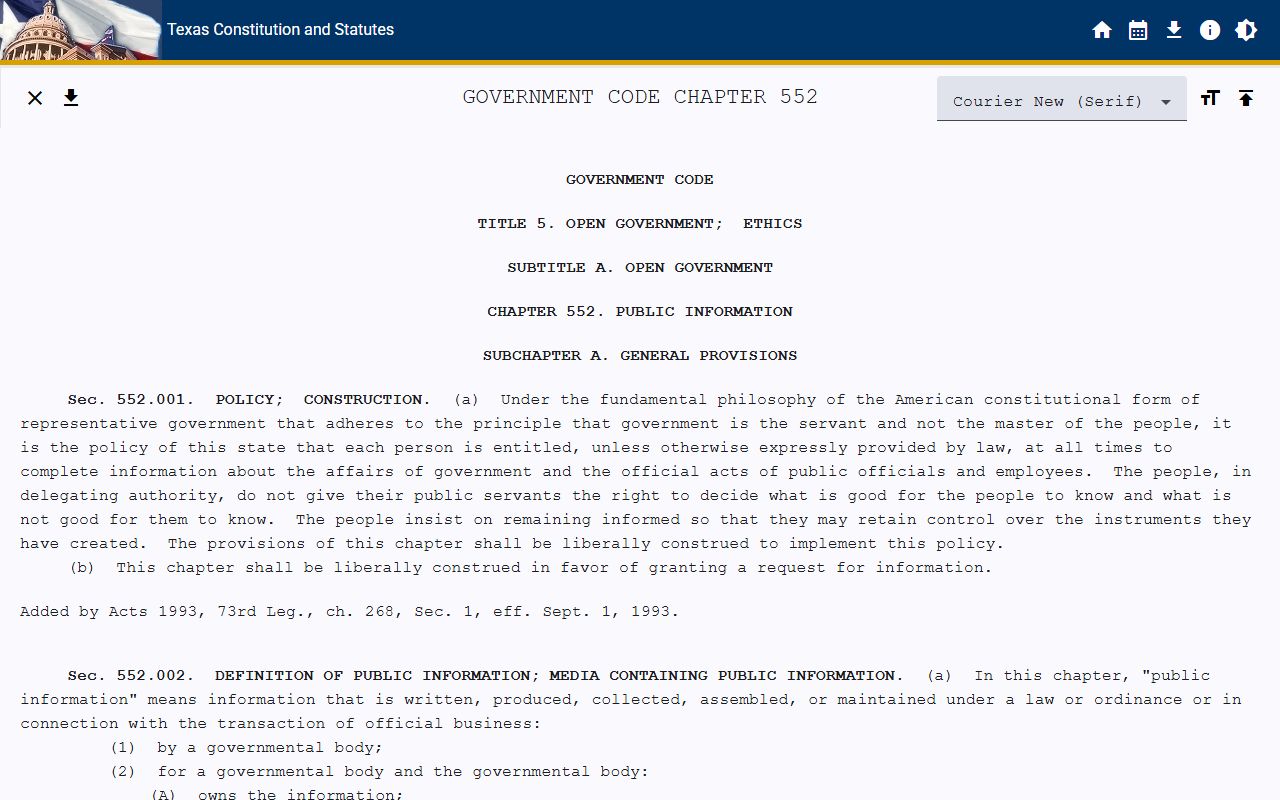
Section 552.021 says public information must be open during normal business hours at county offices, and Section 552.0035 explains that access to court records follows Supreme Court rules rather than the standard request process. That split is why the Sheriff warrant tool, the District Clerk system, and the JP site each handle their own slice of the data.
Restricted Harris County Warrant Records
Not every warrant or related record is open to public view. Juvenile warrant and case information is restricted under the Family Code. Sealed and expunged records are kept out of public search. Records under an order of nondisclosure are sealed from the public while staying open to law enforcement. Some active investigations are also withheld so that release does not tip off a suspect or harm a case.
Sealing and nondisclosure follow set rules. The law that governs nondisclosure of criminal history sits in Chapter 411 of the Government Code. The image is from Texas Government Code Chapter 411, which covers criminal history record information and orders of nondisclosure.
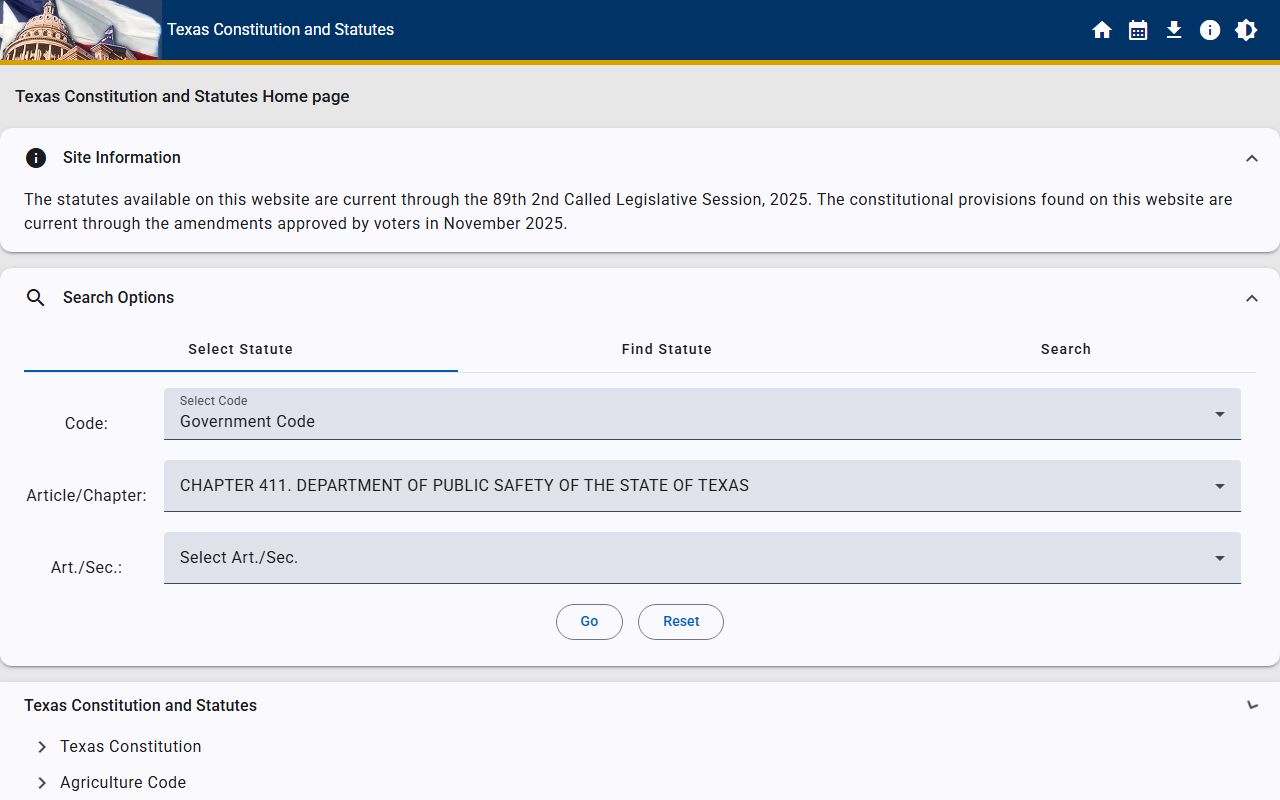
Nondisclosure seals a qualifying record from the public but does not destroy it, and it does not hide the record from criminal justice agencies. Expunction, by contrast, can require agencies to delete or destroy a record. Personal data such as Social Security numbers and account numbers is redacted before release under the confidentiality rules in the same chapter of state law.