
How to Search Harris County Traffic Court Records
Most Harris County traffic court records sit in the justice of the peace courts. The main search path runs through the Harris County JP Courts site and its linked JP Odyssey portal. That portal lets you look up cases and dockets for the 16 justice courts. A search can show active cases, closed cases, paid tickets, dismissed charges, and cases with a warrant. City of Houston tickets are not in this system. Those run through the Houston Municipal Courts instead.
Have a few things ready before you start. The citation number is the fastest way in. If you do not have it, a full name works too. Some lookups also use a driver license number or a date of birth. Know which court is on the ticket, since the JP portal and the city system are separate.
The Houston Municipal Courts page is the right place to begin for a City of Houston ticket. The image below is from the Houston Municipal Courts site.
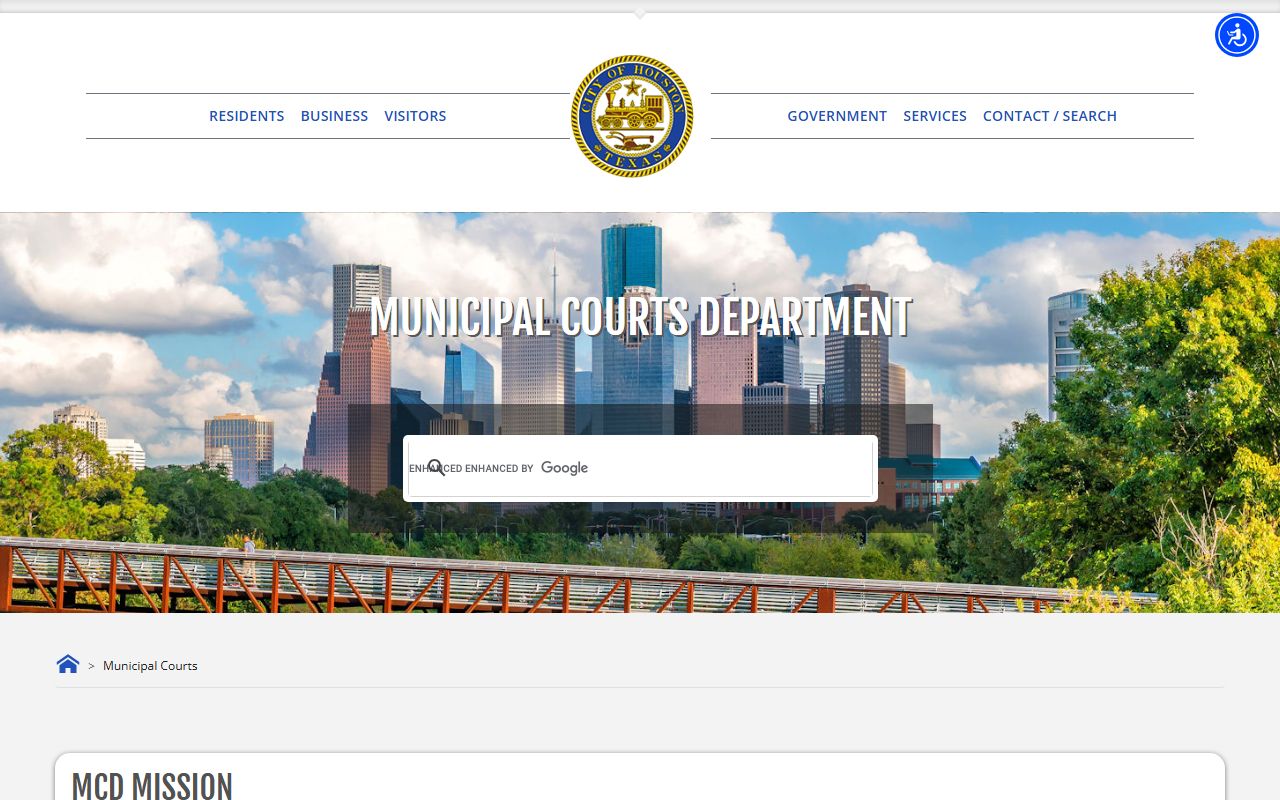
From there you can find case info, pay a city ticket, or ask about a court date. For county and constable citations, use the JP path instead.
- Open the JP Odyssey portal from the JP Courts site, or the Houston Municipal Courts site for a city ticket.
- Enter the citation number, or type the driver name if you do not have the number.
- Narrow the search by court, precinct, or filing date to cut down the list of matches.
- Open the case and read the charge, the court date, the plea, and the disposition.
- Pay the fine, enter a plea, ask for a driving safety course, or request a certified copy from the court.
Which Courts Handle Traffic Cases in Harris County
Harris County splits traffic cases by who wrote the ticket and how serious it is. This is the part that sends people to the wrong building. Most routine fine-only Class C tickets that come from a constable, a deputy, or DPS go to a justice of the peace court. The county runs 16 of them, spread across eight precincts. City of Houston tickets do not go to a JP court at all. They go to Houston Municipal Courts. More serious traffic crimes move up to the county criminal courts at law or the district courts.
DWI is the clearest example of that step up. A first DWI is a Class B misdemeanor and goes to a county criminal court at law. Felony DWI, intoxication assault, intoxication manslaughter, evading, and repeat driving while license invalid can land in a district court. Those are criminal cases, not simple traffic tickets, and the court records live with the District Clerk. The JP courts are not downtown. They sit out in places like Baytown, Pasadena, Humble, Klein, and west Houston, so check the address before you drive.
| Court | Traffic Cases Handled | Address |
|---|---|---|
| Justice of the Peace Courts (16 courts, 8 precincts) | Fine-only Class C tickets from county, constable, and DPS citations | Countywide; example: JP Precinct 1 Place 1, 7300 North Shepherd, Houston, TX 77091 |
| Houston Municipal Courts | City of Houston tickets and Class C city ordinance cases | City of Houston; 311 or 713-247-5479 |
| County Criminal Courts at Law (1-16) | Class A and B misdemeanors, including first DWI | 1201 Franklin, Houston, TX 77002 |
| District Courts | Felony DWI and serious traffic crimes | 201 Caroline, Houston, TX 77002 |
For the lower courts that hear most tickets, see the Harris County justice courts page. To confirm a judge or court name, the state keeps a full directory, shown below from the Texas Judicial Directory.
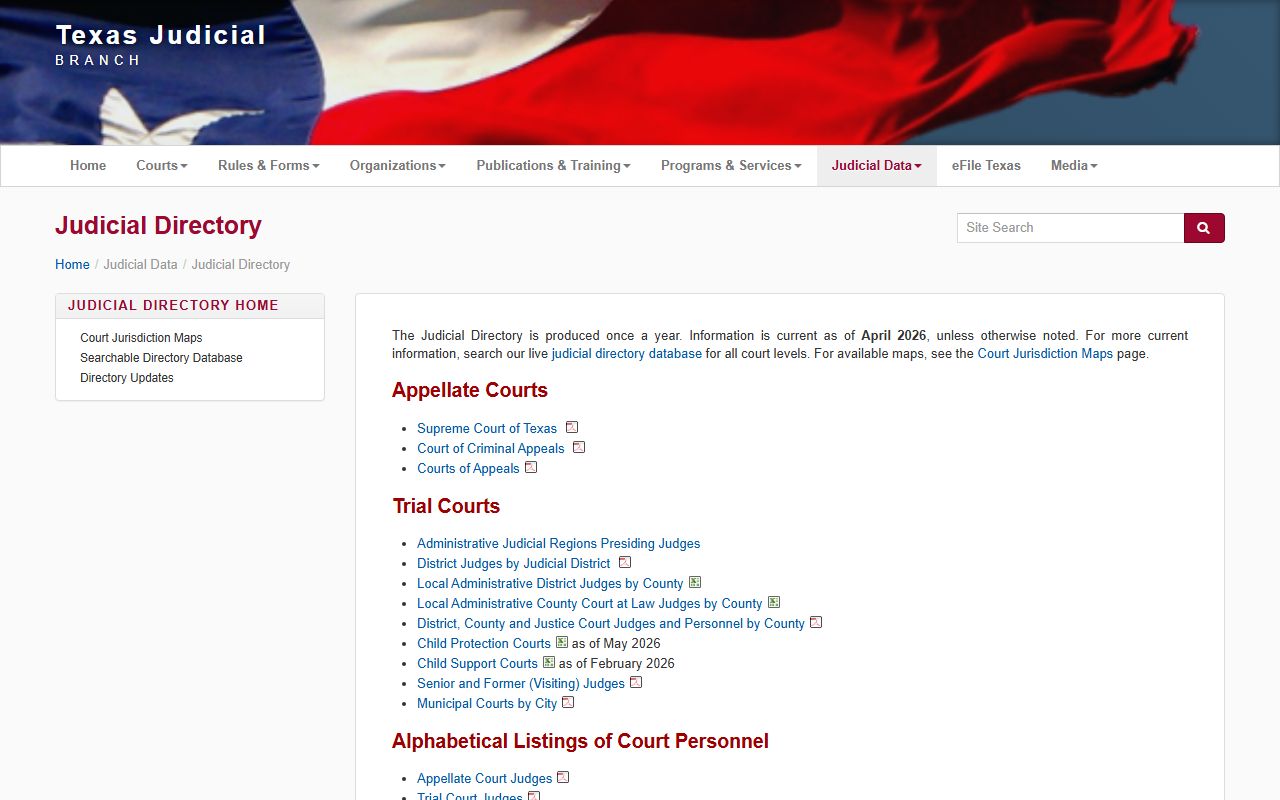
That directory lists Texas judges and courts by county, which helps when a citation names a court you do not know.
Types of Traffic Cases on Record
Traffic cases cover a wide range of charges. Most start as a Class C misdemeanor, which is fine-only and carries no jail time. The offenses come from the Texas Transportation Code Title 7, which sets the rules of the road and citation charges. Some cases stay simple. Others, like no-insurance or accident cases, can require a court appearance and extra documents. The list below sorts the common types you may see in a Harris County traffic court record.
- Moving violations - speeding, running a red light, unsafe lane change, and following too close are the bulk of JP traffic cases.
- Non-moving and equipment - expired registration, no inspection, broken lights, or a faulty equipment charge.
- Insurance and license - no proof of financial responsibility, driving while license invalid, and no valid license.
- Commercial vehicle - weight, log, and safety violations tied to a commercial driver or truck.
- Accident-related - failure to maintain financial responsibility or charges written after a crash, which may need a court date.
Note: a crash report is not part of a traffic court file, so a case search will not return the police accident report.
What Harris County Traffic Court Records Show
A traffic case file is more than a charge and a fine. Each JP or municipal record holds a set of fields that track the case from the stop to the final judgment. When you open a case in the JP portal, you can see who was charged, the court, the plea, the date, and the balance due. The table below lists the fields a Harris County traffic court record commonly shows.
| Field | What It Shows |
|---|---|
| Citation / Ticket Number | The number printed on the ticket, used to pull the case. |
| Defendant Name | The driver charged in the case. |
| Court | The JP precinct and place, or the municipal court that holds the file. |
| Filing / Violation Date | The date of the stop and the date the case was filed. |
| Officer / Agency | The officer who wrote the ticket and the agency, such as a constable or DPS. |
| Charge / Statute | The offense and the Transportation Code section or city ordinance. |
| Court Date | The appearance or setting date for the case. |
| Plea | Guilty, not guilty, or no contest. |
| Disposition | The outcome: conviction, dismissal, deferral, or driver safety course. |
| Fine and Court Costs | The fine, the court costs, the balance due, and any payment plan. |
| Warrant Status | A capias or warrant flag if the driver missed a date or a payment. |
Texas does not run a numeric point penalty on the case file itself the way some states do. Points and surcharge history live on the state driver record, which is a separate file covered further down.
Searching by Citation Number vs by Name
You can search a Harris County traffic court record two main ways. The citation number is the cleanest. It points to one case, so there is no guessing. The catch is the format. A ticket number can be long, and one wrong digit returns nothing. A name search casts a wider net. It works when you lost the ticket, but a common name can pull many matches. When that happens, add the court, the precinct, or a date range to narrow the list. The table below shows the fields a JP citation lookup uses.
| Search Field | Type | Required | Notes / Format |
|---|---|---|---|
| Citation / Case Number | Text | One identifier needed | Best single search; enter the number exactly as printed on the ticket |
| Defendant Name | Text | One identifier needed | Use if you do not have the number; a common name returns many matches |
| Court / Precinct | Dropdown | No | Pick the JP precinct and place to narrow results |
| Filing / Court Date | Date range | No | MM/DD/YYYY range to cut down a long name list |
| Driver License Number | Text | No | May help match the right driver on a name search |
Note: the JP portal returns Harris County justice court cases only, so it will not show City of Houston tickets or out-of-county cases.
Paying or Contesting a Harris County Traffic Ticket
You have choices once you find the case. You can pay the fine, ask for a driving safety course, or fight the charge. The JP courts take online payment by credit card through the official site for drivers who are not required to appear. Some cases must be handled in person. No-insurance charges, accident cases, CDL matters, and juvenile cases can require a court date or extra documents. Watch the deadline on the ticket. Miss it and the court can issue a capias for failure to appear.
Pleas come in three forms. A guilty or no contest plea closes the case and usually means paying the fine and costs. A not guilty plea sets the case for a hearing or trial, where you can present your side. If you cannot pay, tell the court right away. A judge can offer a payment plan or other options when a driver lacks the income to pay in full. One warning matters most here: do not pay the citation first if you want a driving safety course, because paying can count as a conviction.
- Find the court named on the citation. A City of Houston ticket goes to Houston Municipal Courts; a county, constable, or DPS ticket usually goes to a JP court; DWI and higher charges go to criminal court.
- Search the official portal for that court. Use the JP Odyssey portal for JP cases, or the Houston Municipal Courts site or 311 or 713-247-5479 for city tickets.
- Check whether the case requires a personal appearance. No-insurance, accident, CDL, juvenile, and warrant cases often do.
- If you want a driving safety course dismissal and you qualify, apply for the course before you pay anything. Paying first can lock in a conviction.
- If you are contesting, enter a not guilty plea or contact the court for setting instructions. Use an official form such as the Traffic Ticket Reply Form where the court offers one.
- If you are paying, use only the official court payment link. Keep your receipt, confirmation number, course approval, and any dismissal order as proof.
Important: The JP courts warn about fake court-payment scams that use text or email links and QR codes. Pay only through the official JP or municipal court website, never through a link sent to your phone.
If a warrant already exists for failure to appear or failure to pay, online payment may still be possible. The warrant is not recalled until the court receives the payment, and that can take until the next business day. Verify a warrant through the official court or the Harris County warrant records page before you assume it is cleared.
Public Access Laws for Traffic Court Records
Most traffic court cases are open to the public. Texas treats court files and general government records under different rules. The Texas Public Information Act covers records held by government bodies, but access to court files runs through court rules instead of a plain open-records request. In practice, you use the JP or municipal court portal for the case, and the state DPS system for a personal driver record. Some matters are held back. Juvenile traffic cases can be restricted, and sealed or expunged records leave public view by law.
One statute matters a lot for traffic. Motor vehicle and driver-license data carries its own privacy protection, which is why a public case search and a personal driver record are not the same thing. The image below shows the public DPS search the state runs, taken from the Texas DPS public sex offender registry search.
That DPS public search is a registry tool, not a traffic case lookup, but it shows how the state separates public search sites from personal driver records that only the license holder can order.
Key Statutes:
Texas Government Code § 552.0035 - access to court records is set by Supreme Court rules, not the standard open-records request.
Texas Government Code § 552.130 - protects Texas motor vehicle operator, license, title, and registration data.
Texas Transportation Code Title 7 - sets the rules of the road and the traffic offenses behind most citations.
Court Traffic Records vs State Driver Records
This is the distinction that confuses the most people. A court traffic record and a state driver record are two different files. The court file is the case: the citation, the charge, the plea, the court date, the fine, and the warrant status. The state driver record is your driving history, held by the Texas Department of Public Safety. It shows convictions reported to DPS, your license status, and surcharge or crash data depending on the record type. You fix a court error at the court. You fix a driver record error through DPS. The table below sets them side by side.
| Comparison Point | Court Traffic Record | State Driver Record |
|---|---|---|
| Record source | JP court, municipal court, or criminal court that holds the case | Texas DPS online driver record request system |
| What is in it | Citation, charge, plea, court date, disposition, fine, costs, warrant status | License status, convictions reported to DPS, surcharges, crash data by record type |
| Where to access | JP Odyssey portal or the municipal court site for the case | DPS driver record system, ordered by the license holder |
| How to correct errors | Contact the court that holds the case file | Work through DPS, since DPS keeps the driving history |
The DPS system lets a Texas license holder request and print their own driver record. The image below is from the Texas DPS online driver record request system.
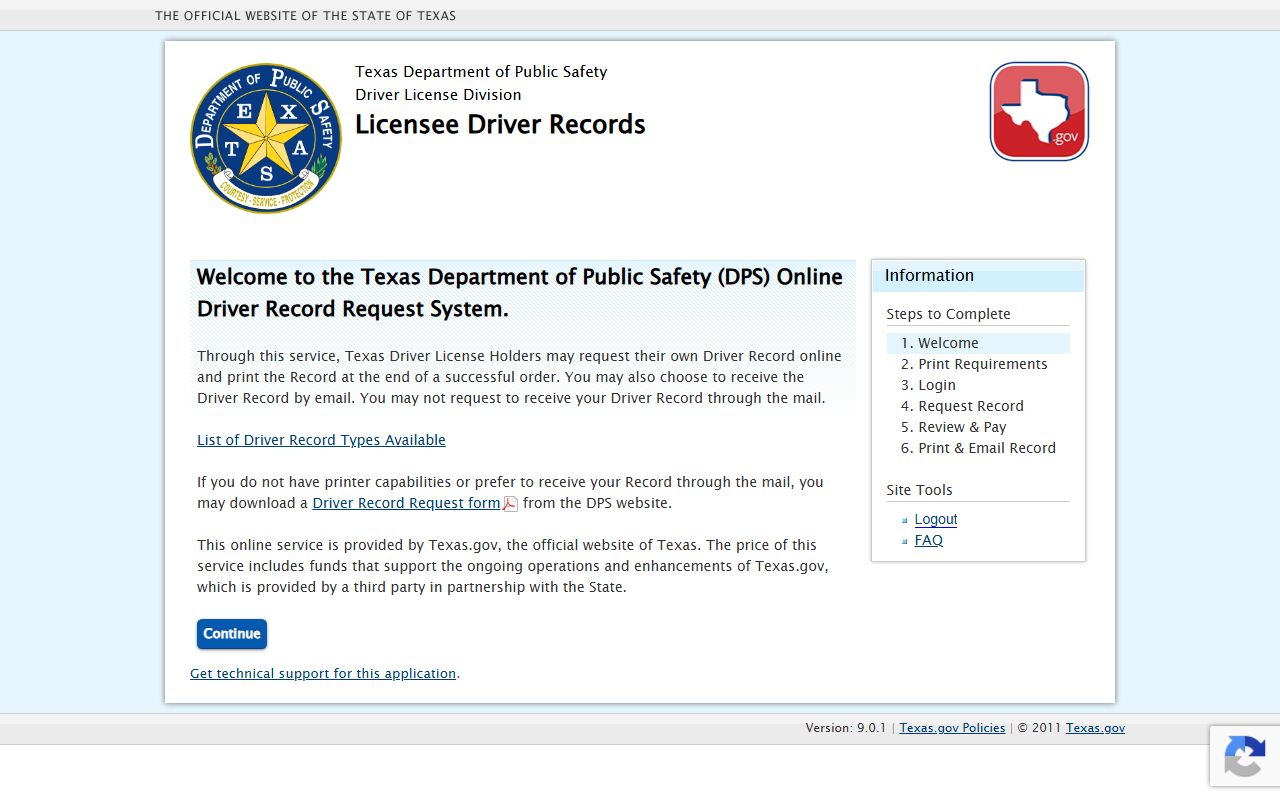
DPS prints or emails the record at the end of the order. It does not mail it through the online tool, so a driver who needs a mailed copy uses the DPS paper request form instead.
CDL and Commercial Driver Records
Commercial drivers play by stricter rules, and the usual ticket advice can hurt them. Federal and Texas rules limit masking traffic convictions for CDL holders. That means a driving safety course or a deferred disposition that would hide a ticket for a regular driver may not be allowed, or may still get reported. The trap is that this can apply even when the CDL holder was driving a personal car. A conviction that seems minor can still land on the commercial record and reach an employer or insurer. A CDL holder should not rely on generic deferral or course advice. Call the court or a lawyer before paying, pleading, or asking for a course. The cost of guessing wrong is the license that pays the bills.
DUI / DWI Cases
DWI is not a simple traffic ticket. It is a criminal charge, so it does not stay in a JP court. A first DWI is a Class B misdemeanor and goes to a county criminal court at law. Felony DWI, intoxication assault, and intoxication manslaughter move up to a district court. Those case files run through the District Clerk, not the JP traffic portal. The county also runs a DWI Court, a problem-solving program tied to supervision, not a way to dismiss a ticket.
For full Harris County DUI/DWI case information, see Harris County criminal records.
Deferred Adjudication and Defensive Driving Course
A driving safety course is the most common way to keep a ticket off the record. The JP courts offer an online service to apply for a Driving Safety Course or a Motorcycle Operator Training Course dismissal. If the court approves and you finish the course, the charge can be dismissed. Two rules trip people up. Do not take the course before the court approves your request. And do not pay the citation first if you plan to apply, because paying can count as a conviction and close the door. You also pay required court costs as part of the course path.
Deferred disposition is a second option. The court holds the case open while you stay out of trouble for a set time, then dismisses it. That keeps the conviction off your driver record. Both options have eligibility limits. Speed, CDL status, no-insurance, and accident cases can knock a driver out. Apply through the official JP service, and keep the approval and the completion certificate as proof.
Important: Do not pay your citation first if you want a driving safety course, and do not start the course until the court approves your request.
Sealing or Expunging Traffic Records
A dismissed or acquitted traffic case may qualify to be cleared. Texas offers two tools. Expunction removes qualifying arrest and case records under the Code of Criminal Procedure Chapter 55. It is the strongest remedy and is generally available when a case did not end in conviction, such as a dismissal or an acquittal. An order of nondisclosure under Government Code Chapter 411 seals a record from public view but does not destroy it, and it still lets law enforcement see the file. Deferred disposition is a common path to nondisclosure for a traffic case.
A conviction usually blocks expunction. So does an unpaid balance or an incomplete case. To clear a record, a person files in the proper court, names the agencies that hold the record, gives the case details, and waits for a ruling. Most minor traffic cases that end in a dismissal through a driving safety course already stay off the public record, so check the disposition before you file.
Fees for Traffic Record Copies
Copy fees depend on who holds the record. The court that handled the case sets the cost for a case copy, and you request it from that court. A state driver record is priced and ordered through the DPS online system, which adds a fee that supports Texas.gov operations. Online searching of a case in the JP portal is free; you pay only when you order a copy or a certified record. The amounts below follow the Harris County public-record copy fees as a general guide. Confirm the exact charge with the specific court before you order.
| Item | Amount |
|---|---|
| Non-certified paper copy (per page) | $1 |
| Certified copy | $5 certification plus $1 per page |
| Records search fee | $5 per search |
| State driver record (DPS) | Set and charged by the DPS online system |
For copies tied to a District Clerk case, fees follow the separate clerk schedules. See the Harris County District Clerk page for those details.