
Harris County District Courts Overview
District courts are the top trial courts in Texas. They hear felony criminal cases and major civil suits, and they handle family and juvenile matters that lower courts cannot. In Harris County the volume is huge, so the district courts are split by subject. Civil district courts take high-value civil suits, tax cases, and injunctions. Criminal district courts handle felony prosecutions. Family district courts hear divorce, custody, support, and protective orders. Juvenile district courts deal with delinquency and child-related cases.
The District Clerk, Marilyn Burgess, keeps the records for all of these courts. Her office runs the search portal and the docket tools for district court files, and the main counter sits at 201 Caroline Street, Suite 420. The courts spread across a downtown campus. Civil and family district functions cluster at the Harris County Civil Courthouse on Caroline Street, while criminal courts sit a few blocks away at 1201 Franklin Street. Confirm the building before you go, because the campus covers several blocks and the wrong door can cost you time.
Texas has two high courts at the top of the system. The Supreme Court of Texas is the highest civil court. The Court of Criminal Appeals is the highest criminal court. Cases from Harris County reach those courts only after they pass through an intermediate court of appeals.
Harris County District and County Courts
Harris County does not number its district courts in a single public street list the way some smaller counties do. District judges sit by subject, and the District Clerk routes filings to the right bench. The county-level trial courts that sit alongside the district courts are numbered and easier to map. The County Civil Courts at Law take lower-dollar civil cases, eminent domain, and appeals from the justice courts.
| Court | Location | Phone |
|---|---|---|
| Civil Court at Law No. 1 | 201 Caroline, 5th Floor | 832-927-1701 |
| Civil Court at Law No. 2 | 201 Caroline, 5th Floor | 832-927-1702 |
| Civil Court at Law No. 3 | 201 Caroline, 5th Floor | 832-927-1703 |
| Civil Court at Law No. 4 | 201 Caroline, 5th Floor | 832-927-1704 |
| Civil Court at Law No. 5 | 201 Caroline, 5th Floor | 832-927-1005 |
The 16 County Criminal Courts at Law handle Class A and Class B misdemeanors at 1201 Franklin Street. The five statutory probate courts and the 16 justice courts round out the local trial bench. For the full county and justice court breakdown, see the Harris County Courts at Law and justice courts pages.
District Court vs County Court vs Justice Court
Each court level has its own job. The district court takes the biggest cases. The county courts at law take the middle tier. The justice courts take the smallest matters. The table below sums up where each type of case belongs in Harris County.
| District Court | County Court at Law | Justice Court | |
|---|---|---|---|
| Civil cases | High-value and complex civil | Lower-dollar civil and JP appeals | Small claims and minor civil |
| Criminal cases | Felonies | Class A and B misdemeanors | Class C fine-only |
| Family cases | Yes, divorce and custody | Generally no | No |
| Appeals to | Court of Appeals | Court of Appeals | County courts |
This split matters for searches. A felony record lives with the District Clerk. A misdemeanor or small civil case may run through the County Clerk and the county courts instead.
How a Case Moves Through the Harris County Courts
A case follows a set path. A criminal case starts with arrest and a first appearance before a magistrate. A grand jury may return a felony indictment. The case is then arraigned, worked up in pretrial, and set for trial in a criminal district court. A civil case starts with a petition and an answer, then moves through discovery and often mediation before trial. Either type can be appealed.
Criminal flow: Arrest › Magistrate / First Appearance › Indictment or Information › Arraignment › Pretrial › Trial › Sentencing › Appeal
Civil flow: Petition Filed › Answer › Discovery › Mediation › Trial › Judgment › Appeal
Civil, Family, and Criminal Divisions
The civil district courts hear high-value lawsuits, tax disputes, injunctions, and complex civil matters. The criminal district courts handle felony prosecutions, from the first setting through sentencing and post-conviction writs. Each criminal district court works with the District Attorney and the defense bar to move felony cases.
The family district courts hear divorce, custody, child support, protective orders, and parent-child cases. Family files carry extra privacy rules, so many family documents are held back from the public search even when the case itself is listed. Juvenile district courts handle delinquency and child welfare matters, and those records are restricted under the Family Code. To search any of these files, start with Harris County court records through the District Clerk.
How to Search Harris County District Court Records
District court files run through the District Clerk's online portal. Public case information is free once you set up a login, and the portal covers civil, family, criminal, and juvenile district cases. The key is to search by the right court type, since the portal sorts results that way. Family documents stay restricted from public view even when the case is listed.
- Open the District Clerk "Search Our Records and Documents" portal and choose Party Inquiry for a name search.
- Type the party name in "Last, First" form, or enter a cause number if you have one.
- Pick the court type, Civil, Criminal, or Family, then add a filed date range.
- Open the case to read the parties, status, and docket entries.
- Log in to view filed documents, or order a certified copy from the clerk.
The portal returns Harris County data only. It does not include federal cases, other counties, justice court records, or municipal Class C tickets. For a deeper walkthrough of every record type, see Harris County court records.
Harris County Appeals and Higher Courts
Appeals from Harris County district and county courts go to one of two intermediate courts. The First Court of Appeals and the Fourteenth Court of Appeals both sit in Houston. A case may be assigned to either one. This is unusual, since many counties have only one local appellate court, so an appellate lookup may mean checking both.
After the court of appeals, a civil case can seek review at the Supreme Court of Texas. A criminal case goes instead to the Texas Court of Criminal Appeals. The Texas Judicial Branch publishes a full map of how these courts connect.
Federal District Court in Houston
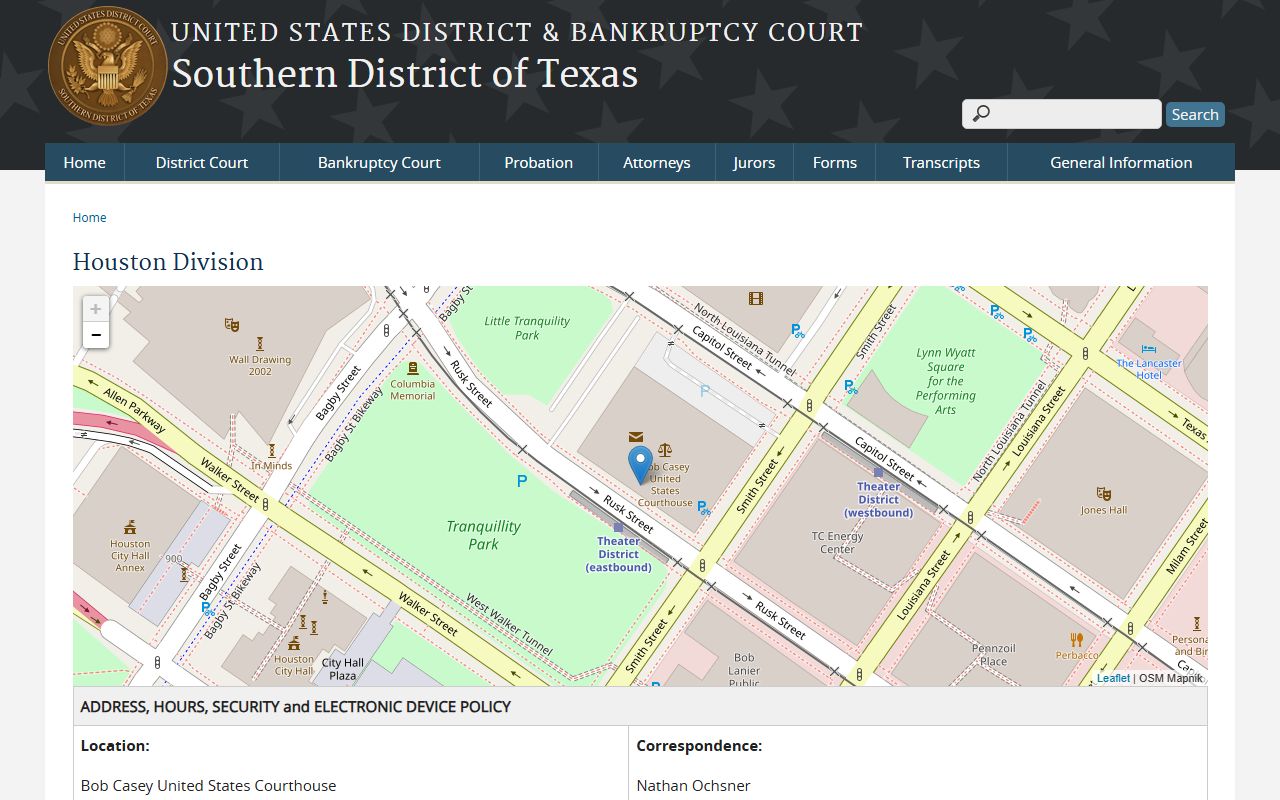
Harris County also sits inside a federal court district. The United States District Court for the Southern District of Texas, Houston Division, handles federal civil, criminal, and bankruptcy cases. The main courthouse is the Bob Casey United States Courthouse at 515 Rusk Avenue. The district serves more than nine million people across 43 counties. The court's Houston Division page lists its address, hours, and entry rules, and it requires a government-issued photo ID to enter.
The federal court runs its own records and case pages, separate from the county. The image below comes from the Southern District of Texas, Houston Division site.
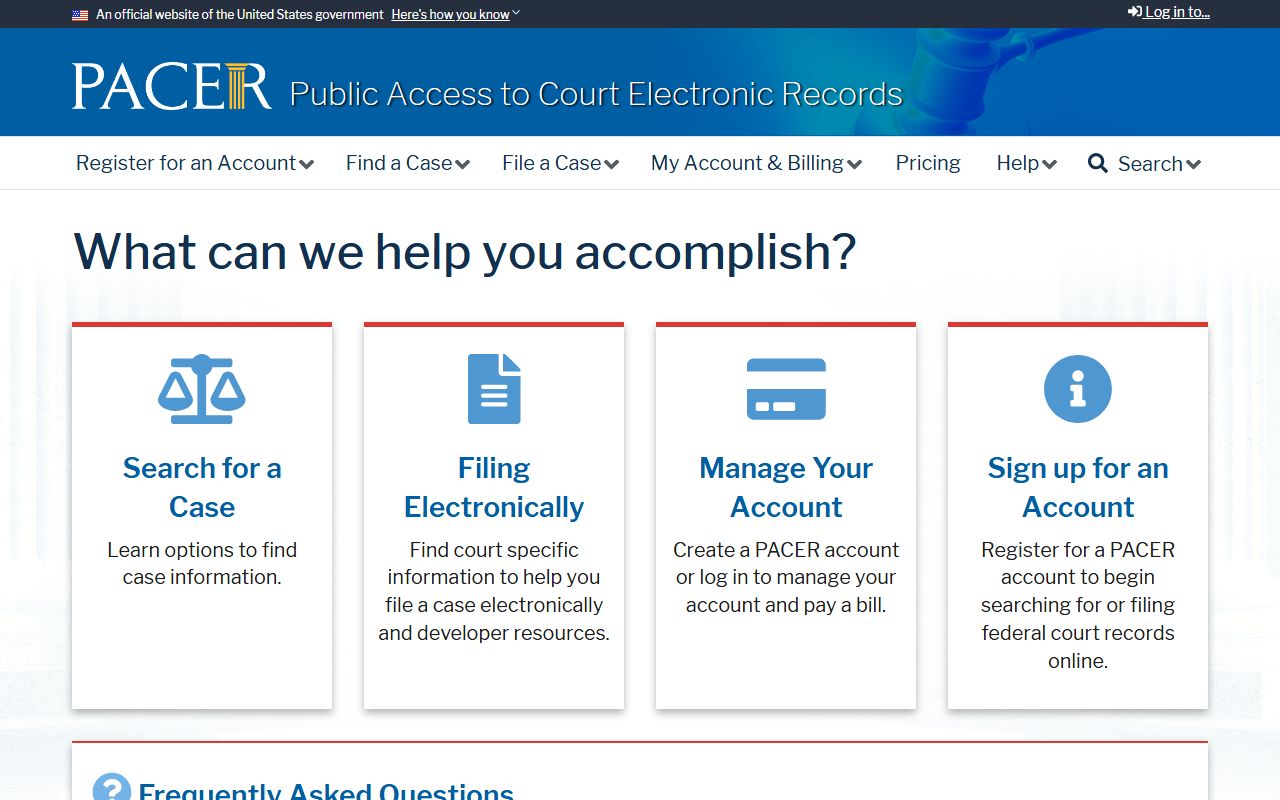
Federal cases never appear in the county clerk portals. To pull a federal case, you use PACER, the official federal case access system. Registration and search both start there, as shown in the screenshot from PACER.
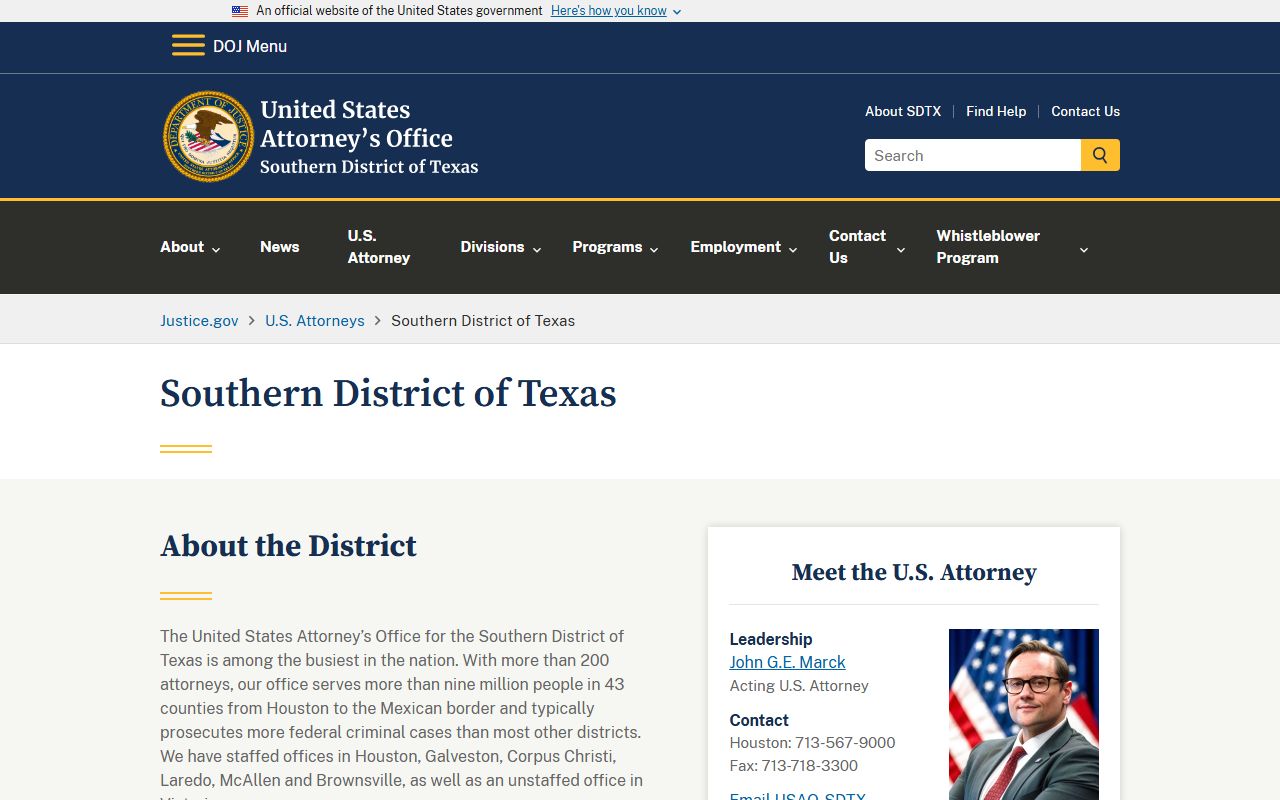
Federal prosecutions in this area are handled by the U.S. Attorney's Office for the Southern District of Texas, one of the busiest federal prosecutor offices in the country. Its site, pictured below, lists divisions and resources from the U.S. Attorney's Office for the Southern District of Texas.
Federal appeals from Houston go to the U.S. Court of Appeals for the Fifth Circuit.
Magistrate and Lower Courts in Harris County
Below the district courts sit the county and local courts. The County Criminal Courts at Law handle misdemeanors and the warrants that come with them. The 16 justice courts handle Class C cases, traffic, small claims, and evictions across the county, from Baytown to Pasadena to west Houston. Municipal courts handle city ordinance cases and City of Houston tickets.
Magistrates handle the early steps of a criminal case. A magistrate sets bail, gives warnings, and can approve a personal bond release. The justice court footprint is wide, so travel time matters. A person with a JP case in Baytown, Humble, Pasadena, or Klein should not plan around the downtown courthouse. For dockets and settings across these courts, see Harris County court dockets, and for clerk contact details, see the District Clerk page.
Note: Always confirm the court level before you search, since a felony record lives with the District Clerk while a misdemeanor or small civil case may run through the county courts.